First Aid

Showing all 8 results

  • Sale! Basic Life Support (Resuscitation) Course

    Basic Life Support (Resuscitation) Course

    Original price was: £30.00.Current price is: £15.00. + VAT

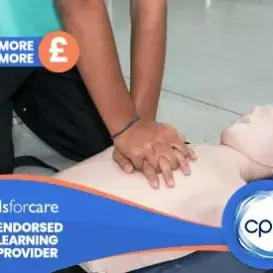
    This Basic Life Support course is for anybody trained or untrained, who wishes to feel more confident in dealing with a collapsed adult or child. Please note that the Online course does not qualify its users to carry out either of these tasks without further practical training.

    Learning Outcomes:

    • Know how to assess the collapsed victim
    • Learn how to perform chest compressions and rescue breathing
    • Know how to deal with a person who is choking
    • Be able to place an unconscious person in the recovery position
    • Understand your legal obligations under the first aid regulations
  • Sale! Catheterisation Course (CPD Accredited)

    Catheterisation Course (CPD Accredited)

    Original price was: £30.00.Current price is: £15.00. + VAT

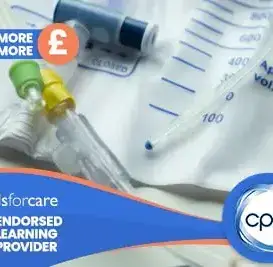
    Urinary Catheterisation is a medical procedure used to drain and collect urine from the bladder. Our Catheterisation Course, designed for RGNs & Care Staff, covers both theoretical and practical elements. By the end of the course, attendees will be familiar with reasons for Catheterisation, the equipment selection and the processes involved.

    Learning Outcomes:

    • Definitions & methods of catheterisation
    • Differences between supra-pubic & urethra catheters
    • Advantages/disadvantages of urinary catheters
    • Reasons for catheterisation
    • Male/female anatomy
    • Male catheterisation procedure (theory)
    • Female catheterisation procedure (theory)
    • Post-procedure catheter positioning
    • Post-procedure checklist
    • Record keeping

    The certificate is immediately available upon completion online.

  • Sale! Placeholder

    Developing a Safety Procedures Manual

    Original price was: £20.00.Current price is: £15.00. + VAT

    Developing a Safety Procedures Manual complete with certificate

    Safety procedures are the backbone of an organisation’s Safety Management System. They provide consistency and when followed create a safe working environment and greater productivity due to less injury down time. However, safety procedure writing is more difficult and time consuming than it at first appears. This course will give you the foundation to start writing effective safety procedures.

    Learning Outcomes

    • Develop a Safety Procedure Template
    • Develop a flowchart to accurately depict process activities
    • Use brainstorming to gather necessary information for safety procedure creation
    • Understand a variety of procedure types (Step-by-Step, Playscript, Decision Tree, Decision Tables)
    • Write and revise Step-by-Step safety procedures
    • Add communication elements to safety procedures
  • Sale! First Aid at Work Course

    First Aid at Work Course

    Original price was: £30.00.Current price is: £15.00. + VAT

    First Aid at Work Course

    The core legal framework governing this is the Health and Safety (First-Aid) Regulations 1981. These regulations require employers to provide adequate and appropriate equipment, facilities, and personnel to ensure their employees receive immediate attention if they are injured or taken ill at work.

    1. Appointed Person

    • Definition: An Appointed Person is someone designated by the employer to take charge of the first-aid arrangements, including looking after the first-aid equipment (like the first-aid box) and calling the emergency services when required.

    • Significance: They are required only when a workplace risk assessment shows that a First Aid at Work (FAW) or Emergency First Aid at Work (EFAW) qualified person is not necessary, or if a qualified FAW/EFAW person is temporarily absent (e.g., on holiday).

    • Training Requirement: The Appointed Person does not need to hold a formal FAW/EFAW qualification. They simply need basic instructions on what to do in an emergency. This course, by providing formal training, goes beyond the minimum legal requirement for an Appointed Person, making them much more competent.

    2. Qualified First Aid at Work (FAW) Practitioner

    • Definition: A First Aid at Work (FAW) Practitioner is someone who holds a formal, certificate-level qualification achieved after completing a comprehensive three-day (18-hour) course.

    • Role: They are competent to provide comprehensive first aid in the workplace and are generally required in higher-risk environments (e.g., construction, manufacturing) or larger workplaces.

    • The Course’s Role: The course you described is suitable for “those supporting a qualified FAW practitioner.” This means it provides a good level of knowledge for a colleague who works alongside the main FAW provider and needs to assist them effectively.

    3. FAW Annual Refresher

    • Legal Recommendation: The Health and Safety Executive (HSE), which enforces these regulations, strongly recommends that all FAW and EFAW qualified first aiders take a three-hour refresher course every year between their formal, three-year re-qualification training.

    • Purpose: The annual refresher helps to prevent skill fade and keeps first aiders updated on any new protocols.

    • The Course’s Role: The content of the course you described “fulfils the requirements for the FAW annual refresher,” meaning it is an ideal candidate for FAW practitioners looking to keep their skills sharp annually.

    Learning Outcomes (The Specific Skills)

    The learning outcomes listed cover the critical, life-threatening emergencies that a workplace first aider must be able to manage immediately.

    Outcome Description & Importance
    Unconscious (including seizures) Assessing a casualty’s responsiveness and knowing how to place them in the Recovery Position to keep their airway open and prevent them from choking on their own fluids.
    Not breathing normally (CPR) The most critical intervention. The ability to perform Cardiopulmonary Resuscitation (CPR) on an adult casualty, significantly increasing their chances of survival until emergency services arrive.
    Bleeding severely Stopping catastrophic blood loss through direct pressure and elevation to prevent the casualty from developing Hypovolemic Shock.
    Suffering from shock Recognising the signs of circulatory shock (often caused by severe bleeding, heart attack, or allergic reaction) and knowing how to treat it (e.g., lying the person down, keeping them warm).
    Choking Knowing the correct sequence of back blows and abdominal thrusts (Heimlich manoeuvre) to clear an airway obstruction.
    Suffering from a heart attack Recognising the signs (e.g., chest pain, shortness of breath), calling for immediate help, and assisting the person into a comfortable position while potentially administering aspirin (if protocols allow).

    In summary, this course is a versatile, intermediate-level online training course, that effectively bridges the gap between the very minimal requirements for an Appointed Person and the full three-day FAW qualification providing the theory only, while also serving as the essential annual update for fully qualified first aiders.

  • Sale! Paediatric First Aid Level 3 Online Course - Ofsted Approved and CPR-Accredited

    Paediatric First Aid Level 3 Online Course – Ofsted Approved and CPR-Accredited

    Original price was: £30.00.Current price is: £15.00. + VAT

    This Paediatric First Aid (Level 3) course has been developed for those who are working/wish to work with children and infants. This accredited course provides theoretical training in first aid techniques that are specific to infants aged under 1, and children aged from 1 year old to the onset of puberty.

    It will especially be of interest to parents, teachers, childminders, crèche assistants, playgroup personnel and anyone else who has a responsibility for their welfare whilst in your care. It is ideal for individuals who are responsible for children and infants, who wish to gain awareness or refresh in this field.

    This course is split into two units:

    Unit 1 Emergency Paediatric First Aid Learning Outcomes:

    • Understand the role and responsibilities of the paediatric first aider
    • Be able to assess an emergency situation safely
    • Understanding of first aid for an infant and a child who is unresponsive and breathing normally
    • Understanding of first aid for an infant and a child who is unresponsive and not breathing normally
    • Understanding of first aid for an infant and a child who has a foreign body airway obstruction
    • Understanding of first aid to an infant and a child with external bleeding
    • Awareness of how to provide first aid to an infant and a child who is suffering from shock
    • Awareness of how to provide first aid to an infant and a child with anaphylaxis

    Unit 2 Managing Paediatric Illness, Injuries and Emergencies:

    • Understanding of first aid to an infant and a child with injuries to bones, joints and muscles
    • Understanding of first aid to an infant and a child with head and spinal injuries
    • Understand how to administer first aid to an infant and a child with conditions affecting the eyes, ears and nose
    • Understand how to administer emergency first aid to an infant and a child with a chronic medical condition or sudden illness
    • Understand how to administer first aid to an infant and a child who is experiencing the effects of extreme heat or cold
    • Understand how to administer first aid to an infant and a child who has sustained an electric shock
    • Understand how to administer first aid to an infant and a child with burns or scalds
    • Understand how to administer first aid to an infant and a child who has been poisoned
    • Understand how to administer first aid to an infant and a child who has been bitten or stung
    • Understand how to administer first aid to an infant and a child with minor injuries
    • Understand how to complete records relating to illnesses, injuries and emergencies

    (Please note this course does not provide practical training.)

  • Sale! RIDDOR Awareness Online Course

    RIDDOR Awareness Online Course

    Original price was: £30.00.Current price is: £15.00. + VAT

    RIDDOR places a legal duty on employers, self-employed people and people in charge of premises.          Under RIDDOR individuals are required to report: work-related deaths, major injuries or over seven-day injuries, work related diseases and dangerous occurrences. The course will help the learner understand the necessary requirements of RIDDOR.

    Learning Outcomes:

    • Know what RIDDOR stands for
    • Be aware of what is reportable under RIDDOR
    • Be aware of the various methods of reporting
    • Be familiar with the roles and responsibilities with regards to RIDDOR
  • Sale! Tissue Viability & Wound Care Online Training Course

    Tissue Viability & Wound Care Online Training Course

    Original price was: £30.00.Current price is: £15.00. + VAT

    This module on Wound Care has been designed to help you understand some of the treatments for pressure ulcers, the types of support surfaces, how to assess pressure ulcers, venous and arterial ulcers and the role of nutrition in wound healing.

    This has been developed using the latest guidance from the medical and nursing Royal Colleges, the Department of Health and the National Institute of Health and Clinical Excellence (NICE).

    Learner Outcomes:

    • Pressure ulcer treatment
    • Assessment of pressure ulcers
    • Venous and arterial ulcers
    • Nutrition
  • Sale! Working At Height Immediate Certificate Course

    Working At Height course

    Original price was: £20.00.Current price is: £15.00. + VAT

    This general working at height course is designed for anyone whose job requires them to work at height. The course focuses on what you need to know to use the right working at height safety equipment in order to create the safest working environment possible.

    Learning Outcomes:

    • Understand the Relevant Health & Safety, Working at Height Regulations and Legislation
    • Knowing and Avoiding the Hazards of Working at Height
    • Understanding the Importance of Carrying Out Risk Assessments
    • Identify and Select the Correct Type of Safety Equipment and PPE (Personal Protective Equipment) for each task
    • Inspection, Maintenance and Record Keeping
    • Employers and Employees Responsibilities